

Micorchips Recipes
︎ 2025
︎ 3-channel installation
︎ Long-Wang (Patrick) Chiang
︎ the Netherlands
STRP: Nominated for Award for Creative Technology (Young ACT Award) 2026
Microchips Recipes began with a simple realization: the chip inside Patrick (Ming-Chun) Chiang's MacBook was made in Taiwan. Living abroad in Europe, and amid Taiwan's complex geopolitical situation, this moment sparked a deeper reflection on what it means to come from somewhere. What home, someone's country, and belonging truly mean.
The work started from noticing something small. That chip in the laptop traveled thousands of miles with him, but it also carried something invisible. The labor, the knowledge, the invisible connection beyond the distance. The distance between holding an object and knowing the distance between home and abroad became the question driving this project. How do we understand home when we are in this planetary computational era?
Chiang started making connections with Taiwanese workers from the TSMC and ASML microchip factories in Taiwan and the Netherlands. Through shared dinners, casual conversations, and time spent together, friendships formed. These workers are not just engineers or technicians. They are people navigating displacement, living between two worlds that the semiconductor industry connects. Some moved from Taiwan to the Netherlands for work. Others stayed in Taiwan but live within the rhythm of global production schedules. Their stories show a particular kind of contemporary migration, driven by technical expertise and economic necessity, but also by ordinary needs and desires.
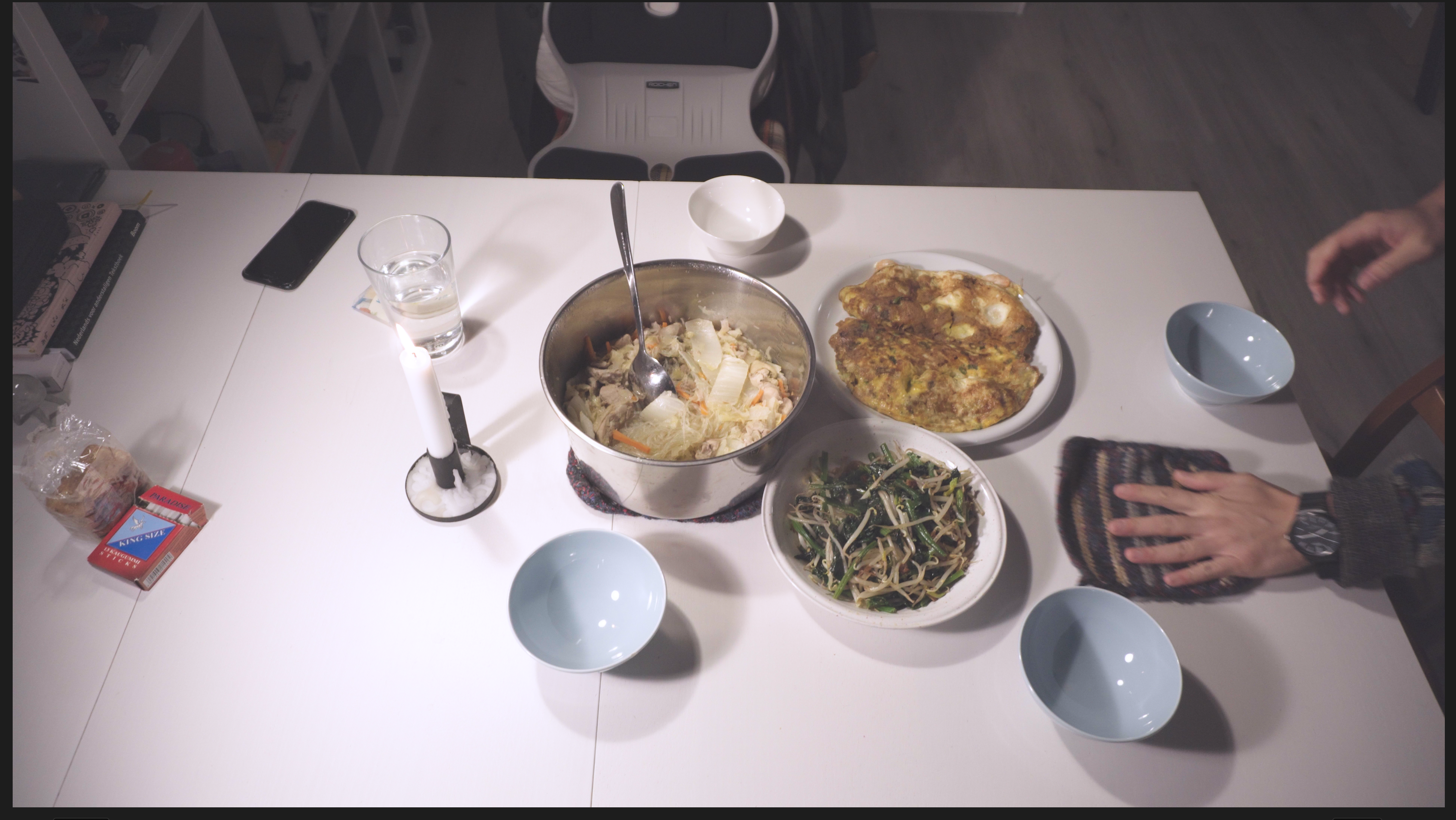
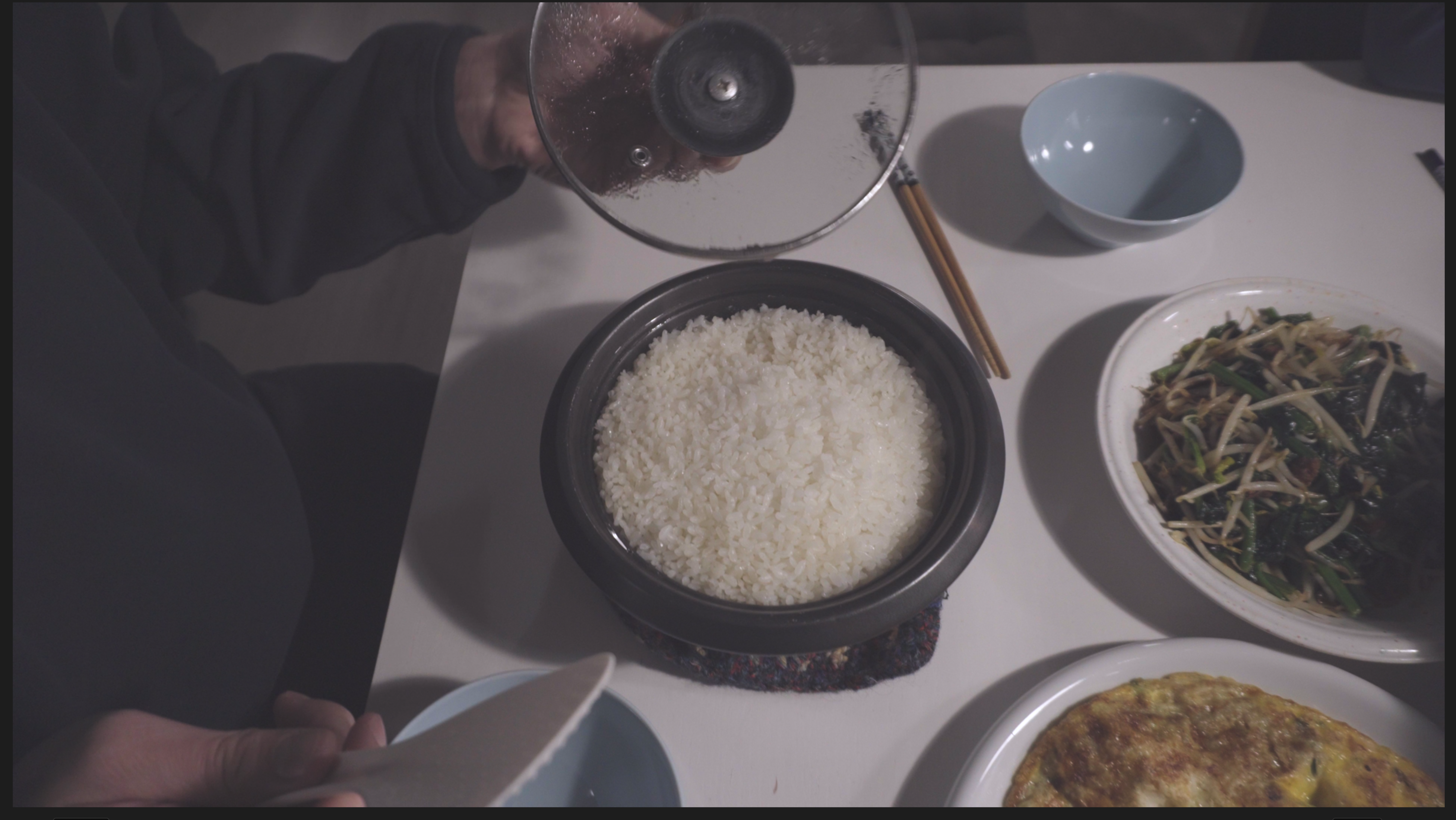
The three-channel video installation shows these workers in everyday moments. Conversations happen over dinner tables. Hands chop vegetables and stir pots. Faces become animated while talking about memories of home. The camera does not stand back and observe. It sits at the table. It is part of the meal. The idea is simple: make connection with instead of just taking information.
Food becomes the way these connections actually happen. Cooking together opens up space where people can talk freely. The professional distance of the workplace falls away. Something more vulnerable emerges. The recipes and the food people share are not just cooking instructions. They carry cultural memory. They are attempts to recreate tastes and smells that bring back distant places. In these moments, home is not Taiwan or the Netherlands. Home is the friends gathering together.The installation shows how home is not a fixed place or political identity, but something fluid and collective, shaped by connection.For these workers, home exists in multiple places at once. It lives in the taste of a familiar dish made in a foreign “home”. It appears in phone calls across time zones with family. It emerges in casual chatting shared between friends who understand what it feels. Home becomes a practice rather than a location. Something people create through daily rituals and relationships.
The work also considers what it means that these chips power devices everywhere, while the people who make them possible stay largely invisible. The semiconductor industry runs on networks of highly skilled workers moving between Taiwan, the Netherlands, and other production centers. This displacement is built into how contemporary technology works. Focusing on individual experiences asks viewers to think about the human dimension of the devices we use without thinking twice.
Microchips Recipes aims to reveal a different way of understanding belonging when technology connects the entire planet. It suggests home is not something we have. It is something we make, together, through connection, adaptation, and readaptation.







